Paver Calculator for Paver Count, Base Material and Sand
Count pavers, base aggregate, and sand for concrete-paver or brick-paver patios — with common-size coverage data for the top residential paver dimensions.
Paver Calculator
Enter project dimensions below — results update instantly. Switch units freely.
Estimates assume typical industry density and waste factors. Always verify with your supplier and local building code before purchasing material.
Why Paver Calculator Estimates Go Wrong
The paver itself almost never fails — they're 8,000+ psi concrete or fired clay. What fails is the base underneath.
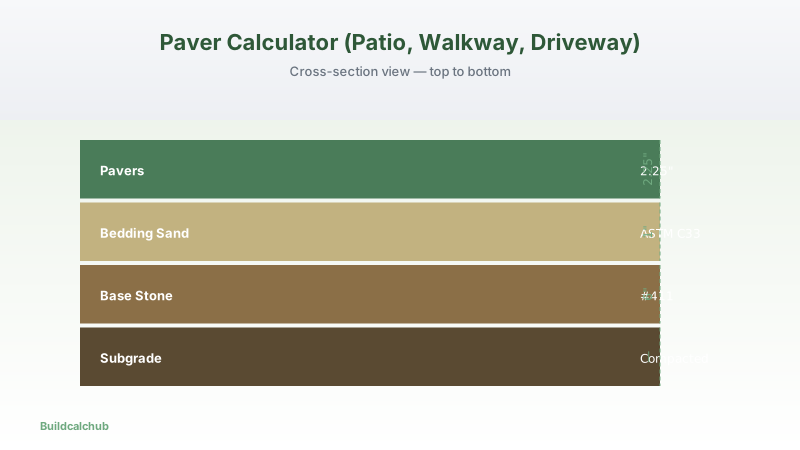
Proper paver installation layers from bottom up:
- Compacted subgrade — native soil after organic removal, compacted to 90%+ Proctor
- Geotextile fabric (optional but recommended over clay) — prevents soil-aggregate migration
- Aggregate base — 4-6 inches compacted DGA or road base for patios, 8-12 in for driveways
- Bedding sand — 1 inch coarse paver sand, screeded flat
- Pavers — set tight, leveled
- Joint sand — polymeric or dry sand, swept into joints and water-activated
- Edge restraint — plastic or aluminum edging pinned into base to prevent spreading
Skip any layer and the patio fails within 2-3 years. Base is cheap; rebuilding a failed patio is expensive.
How to Calculate Paver Calculator
Common concrete paver sizes:
- 4 × 8 in (0.222 ft²) — 4.5 per ft²; brick-look standard
- 6 × 6 in (0.25 ft²) — 4 per ft²; simple square
- 6 × 9 in (0.375 ft²) — 2.67 per ft²; popular patio size
- 8 × 8 in (0.44 ft²) — 2.27 per ft²; larger pattern
- 12 × 12 in (1.0 ft²) — 1 per ft²; slab style
Base material per 100 ft² patio:
- 4 inches DGA base @ 110 lb/ft³ = 1.83 tons
- 6 inches DGA base (for driveway) = 2.75 tons
- 1 inch paver sand @ 100 lb/ft³ = 0.42 tons
- Polymeric joint sand: ~1 bag (50 lb) per 50-100 ft² depending on paver size and joint width
Once the Paver Calculator result looks reasonable, the next-step calculator depends on what you’re sizing: for the full ICPI-compliant base stack (geotextile + crushed + 1-in bedding + polymeric joint sand) use the Paver Base Calculator; for the complete patio cost rollup the Patio Calculator; for the planting beds bordering the patio the Mulch Calculator; and for the lawn around the patio the Sod Calculator or Grass Seed Calculator.
For 2026 installed pricing by paver material (concrete $14–$22/sqft, brick $20–$30, natural stone $25–$40, large-format slabs $28–$45) plus DIY vs contractor break-even and the four line items every quote should show, see the companion paver patio cost guide with regional multipliers across 6 US bands.
What Most Online Calculators Get Wrong Reviewed by the Landscape & Hardscape Review Desk
AI tools calculate pavers as area / paver area. Four pitfalls AI summaries hide:
- 10–15% waste for square patterns; 20–25% for diagonal.
- 4-layer ICPI stack: subgrade + 6-in base + 1-in sand + paver.
- Joint sand (polymeric) is separate line item.
- Edge restraint required.
This calculator outputs paver count + base + sand + joint sand + edge restraint, per ICPI Tech Spec 2. ICPI 4-layer stack — AI's paver-only quote misses 3 layers.
Paver Coverage Table and Material Reference
| Paver Size | Face Area | Pavers per ft² | Typical Price Each |
|---|---|---|---|
| 4 × 8 in | 0.222 ft² | 4.5 | $0.70-1.50 |
| 6 × 6 in | 0.25 ft² | 4.0 | $1.20-2.50 |
| 6 × 9 in | 0.375 ft² | 2.67 | $1.80-3.50 |
| 8 × 8 in | 0.44 ft² | 2.27 | $2.00-4.00 |
| 12 × 12 in | 1.0 ft² | 1.0 | $4.00-8.00 |
| Random mix (3 sizes) | Average 0.4 ft² | 2.5 | $2.50-5.00 |
| Permeable 6 × 9 in | 0.375 ft² | 2.67 | $3.00-5.50 |
| Clay brick 4 × 8 in | 0.222 ft² | 4.5 | $1.20-2.50 |
Prices vary significantly by region and style. Premium ‘old brick’ or custom colors run 2-3× standard pricing.
| Project | Pavers | DGA Base | Sand | Joint Sand |
|---|---|---|---|---|
| Patio 12 × 12 ft (144 ft²) | 650 (6×9 in) | 2.6 tons | 0.6 tons | 1-2 bags |
| Patio 16 × 20 ft (320 ft²) | 854 (6×9 in) | 5.9 tons | 1.3 tons | 3-4 bags |
| Walkway 3 × 40 ft (120 ft²) | 540 (4×8 in) | 2.2 tons | 0.5 tons | 1-2 bags |
| Driveway 12 × 40 ft (480 ft²) | 1,080 (6×9 in) | 13.2 tons | 2.0 tons | 5-6 bags |
| Pool deck 300 ft² (300 ft²) | 800 (6×9 in) | 5.5 tons | 1.25 tons | 3 bags |
Base quantities for patio (4 in) and driveway (6 in). Sand quantities for 1-in bedding layer. Joint sand depends on joint width; figure 1 bag per 50-100 ft².
Real-World Example Calculations
Classic Patio 14 × 18 ft, 6×9 in pavers
Backyard entertainment patio, running bond pattern.
- Length × Width
- 18 × 14 ft
- Paver size
- 6 × 9 in (0.375 ft²)
- Waste
- 10%
Takeaway: Material cost: ~$1,800 pavers + $180 base + $55 sand + $30 polymeric = $2,065. DIY weekend project for 2 people.
Permeable Driveway 12 × 40 ft, 6×9 in permeable
Eco-friendly permeable paver driveway with thickened base.
- Length × Width
- 40 × 12 ft
- Paver size
- 6 × 9 in permeable
- Waste
- 10%
Takeaway: Permeable pavers need 10-12 in open-graded stone base (#57) + 2 in #8 bedding. Water drains through to the soil, reducing stormwater runoff.
Walkway 4 × 60 ft, 4×8 in clay brick
Traditional clay brick walkway in herringbone pattern.
- Length × Width
- 60 × 4 ft
- Paver size
- 4 × 8 in
- Waste
- 15% (herringbone cuts)
Takeaway: Herringbone pattern requires more cuts (hence 15% waste). Add a cement wet-cut saw to rental list.
Step 5 of 5 in the Paver Patio Project Path
- AreaArea Calculator
- ExcavationExcavation Calculator
- BaseCrusher Run Calculator
- Bedding SandSand Calculator
- PaversPaver Calculator
Whole sequence with costs and ordering notes: Paver Patio Project Path.
Sources & Standards
These references are used for terminology, safety boundaries, and engineering assumptions. Local code, supplier specifications, and licensed design documents still control your project.
-
2021 International Residential Code, Chapter 5: Floors and Chapter 8: Roof-Ceiling Construction (decking + framing)
International Code Council
Cited for residential deck framing, joist spacing, and structural requirements.
-
USDA NRCS National Engineering Handbook — Erosion and Sedimentation
USDA Natural Resources Conservation Service
Cited for topsoil placement, slope stability, and drainage practice on landscaping projects.
-
Penn State Extension Center for Turfgrass Science
Penn State College of Agricultural Sciences
Cited for grass seeding rates, sod establishment, and turf-area volume calculations.
-
Sunset Western Garden Book / ANSI A300 Tree Care Standards
Sunset / ANSI
Cited for mulch depth recommendations, tree-well clearance, and landscaping best-practice spacing.
-
CPSC ADA Accessibility Guidelines for Buildings and Facilities
U.S. Consumer Product Safety Commission / ADA
Cited for sidewalk slope, patio threshold, and walkway accessibility requirements.
Frequently Asked Questions
How many pavers do I need?
For standard 6×9 in pavers: 2.67 per ft². For 4×8 in brick-size: 4.5 per ft². For 12×12 in slabs: 1 per ft². Always add 5-10% for waste (15% for complex patterns with many cuts).
How much base do I need for pavers?
For patios: 4 inches of compacted DGA + 1 inch of coarse sand. For driveways: 6-8 inches base + 1 inch sand. Per 100 ft² patio area: 1.8 tons of base aggregate + 0.4 tons of sand.
How much do pavers cost?
Materials: $3-8 per ft² for concrete pavers, $6-15 per ft² for clay brick or premium concrete. Installed by contractor: $15-35 per ft² including base, edging, and labor. DIY saves 50-60% on labor but requires proper base prep.
What size paver is best for a patio?
6×9 inch pavers are the residential sweet spot — large enough to cover area quickly but small enough for interesting patterns. 4×8 brick-style for traditional/classical looks. 12×12 or larger slab pavers for modern minimalist aesthetic.
Do I need polymeric sand for paver joints?
Highly recommended. Polymeric sand is regular sand with polymer binder that activates when watered. Hardens to prevent weed growth, ant infestation, and joint erosion. Regular dry sand washes out of joints within 1-2 years. Cost: ~$30 per 50-lb bag vs. $15 for dry sand — the upgrade is worth it.
How long does a paver patio last?
Properly installed concrete pavers last 30-50+ years. Clay brick pavers 50+ years. The base and joint sand may need refreshing every 10-15 years. Pavers that fail early almost always trace back to base prep or drainage mistakes, not paver quality.
Can pavers be used for a driveway?
Yes with heavier-duty installation. Minimum 3-1/8 in thick pavers, 6-8 in compacted aggregate base, and sand bedding on geotextile. Permeable pavers (open joints) are an excellent eco-friendly option for driveways since they reduce stormwater runoff.